
Counselor Up!
  • Blog
  • About
  • Speaker
  • Author
    • Book Summary
    • Book Discussion Guide
  • Things I Love
  • TPT Store

Working with Parents: Screen Time Limits

6/12/2016

 
Working with Parents: Screen Time Limits www.counselorup.com Do you ever see kids at school who you suspect are spending many hours a day on digital devices?  Would you like to talk to their parents about setting some healthy limits but aren’t sure what to say?  You’re wise to be tentative in approaching any parent about their parenting!   ​Parents want to be seen as competent.  When you approach them to discuss setting healthy limits on their kids’ media usage, you can easily trigger feelings of inadequacy and being judged.  Before parents can hear your message, they need to feel that you are on their side - trying to help them, not make them feel bad about their parenting.
I am very excited to have another guest post to share with you today!   Kathy Slattengren is an internationally recognized, inspirational parent educator and founder of Priceless Parenting. Priceless Parenting offers online parenting classes, parenting presentations and parent coaching.  With Kathy's support, parents learn to effectively handle misbehavior while building loving relationships. Today she's here to share best practices in helping parents to manage screen time. 

Do you ever see kids at school who you suspect are spending many hours a day on digital devices?  Would you like to talk to their parents about setting some healthy limits but aren’t sure what to say?  You’re wise to be tentative in approaching any parent about their parenting! 

​Parents want to be seen as competent.  When you approach them to discuss setting healthy limits on their kids’ media usage, you can easily trigger feelings of inadequacy and being judged.  Before parents can hear your message, they need to feel that you are on their side - trying to help them, not make them feel bad about their parenting.  

Leading with Empathy

When you lead with empathy, parents will feel that you understand them.  Showing empathy will come more naturally when you keep in mind what the parent may be thinking and feeling.  Things like:
  • My kids love being on screens.  If I try to take the screens away they get upset.
  • My kids learn a lot using digital media.
  • They fight less with each other and behave better when they have screens. 
  • My kids use digital devices at school so I know it’s good for them.
  • I’m busy and overwhelmed a lot of the time.  When my kids are on their screens, I can get some things done. 
Try opening with a comment that connects to the parent’s challenge in putting limits around screens.
  • “Your son really loves playing Minecraft. I bet it’s hard when he needs to turn it off.”
  • “Your daughter is so talented at using the iPhone!  What is her favorite thing to do on it?”
  • “Parenting is a non-stop job!  What do you usually do when your kids are busy on their iPads?
 
Ideally the parent will respond with more information about how their kids use their digital devices.  This will allow you to ask questions and learn more about this parent’s thoughts on their kids’ media usage. After you establish a rapport you’ll be in a better position to offer guidance.  

How Much Screen Time is Reasonable?

The American Academy of Pediatrics (AAP) recommendations include avoiding television and other digital media for children younger than 2-years-old. This is primarily due to babies learning best through interacting with people.  It’s the back and forth communication that is essential for learning.
 
For older children, the AAP suggests limiting entertainment screen time -- including TV, video games and computer use -- to one to two hours a day.  Most kids far exceed these recommendations.  According to the AAP, “children are spending an average of seven hours a day on entertainment media, including televisions, computers, phones and other electronic devices”.

Providing Guidelines on Kids' Media Usage

​While you cannot force parents to change their behavior, you can influence them by providing information.  Screens can be addicting for both kids and adults.  Some signs that it’s time to reduce the time kids are spending on media include:
  • Spending less and less time with family and friends
  • Difficulty focusing on the present moment due to craving video games or cellphones
  • Withdrawing from sports, hobbies and social interactions
  • Losing sleep due to gaming, texting
  • Acting irritable or discontent when not using digital items
  • Declining grades in school, missing school
  • Talking and thinking obsessively about the digital activity
  • Denying or minimizing any negative consequences
  • Developing health issues such as Carpel Tunnel Syndrome, eye strain, weight gain, backaches
If parents respond that their kids will have a meltdown if they try to take away their screen time, you can agree that their children may get upset.  You can let them know that some parents seek help from a professional counselor or psychologist to help in setting limits.

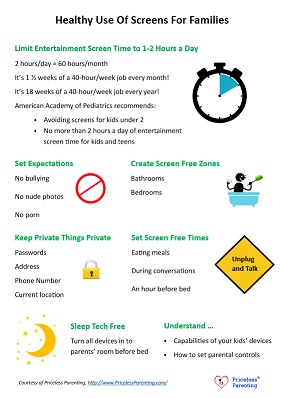
​Providing some written information is a wonderful way to reinforce what you’ve discussed.  You are welcome to print out these flyers to give parents:  
​
  • Healthy Use of Screens For Families
  • Warning Signs of Too Much Screen Time for Kids
  • Too Much Screen Time Hurts Babies
 
These flyers plus additional information is available on Priceless Parenting’s page for “Parenting Digital Kids”.

Researchers have found that children whose parents make an effort to limit media use spend less time with media than their peers.  Although children may resist efforts to reduce their screen time, the long term benefits are worth it!
Picture
Thanks Kathy! Don't forget to check out her website to find lots of free printables, resources, and ideas for working with parents. What's your screen time philosophy? In our household, we are a Saturday morning cartoon kind of family. Occasionally we will watch some TV during the week. If we need extra work time for mom and dad, we try to do iPad games instead of TV.
Meeting the Needs of Refugee Students

5/19/2016

 
I'm happy to have another guest blogger today! Rachel Haltiwanger is an elementary ESL teacher in middle Tennessee, where she advocates for and works with English learners and refugees. She is passionate about helping English learners achieve their full potential. She blogs over at thecozylearningcottage.blogspot.com, where she shares tips and ideas for working with ESL students. You can also find her on twitter, pinterest, facebook, and teachers pay teachers. Rachel is sharing tips for supporting refugee students in your schools. ​
Red Flags: Meeting the Needs of Refugee Students www.counselorup.com
The refugee crisis has been in the news continually for months. As more and more people come fleeing violence, terror, and persecution, schools are encountering populations they have never worked with before. On my first day of teaching, fresh out of college, energetic, and starry-eyed, I walked into my room of second grade English learners only to discover that the majority of my students had relocated to the USA as refugees.
In some sense, refugee students are just like every other student in your school. They require high expectations, growth mindset, manageable goals, and quality and caring instruction but refugee students have some unique needs as well. School counselors are in a prime position to not only reach the needs of these children but to train and prepare their teachers and other staff at the school on how to work with these students effectively. Specifically, there are five areas in which refugee students may have different needs than their American-born peers:

Invite Families to Participate

The amount that US parents are expected to be involved in their child’s schooling is uncommon in many other cultures. As a result it may be seem that refugee parents are uninvolved, simply because they are used to a different level of parental involvement in school. Reach out to families early on, ideally with the aid of a translator/family liaison who can introduce parents to school policies and procedures, explain basic communication between school and home, and demonstrate how school "works" in your building. Parents have every right to understand what is happening at school and be supported in helping their children succeed. With their involvement and support students have a significant leg up in achieving their goals.

Support Physical Needs

​By nature of their refugee status, many refugees have very few possessions and may have come from a significantly different climate than where they are now living. Students need appropriate jackets and shoes in the winter and may even need blankets for their homes. Keep an eye out for students who are wearing the same clothes every day or clothes that don’t fit, or perhaps lack basic school supplies. Students who are cold, hungry, tired, and dirty won’t be able to focus on their studies until their basic needs are met, so work on a way to provide for physical needs of these students (and their families) as well.

Monitor Emotional Needs

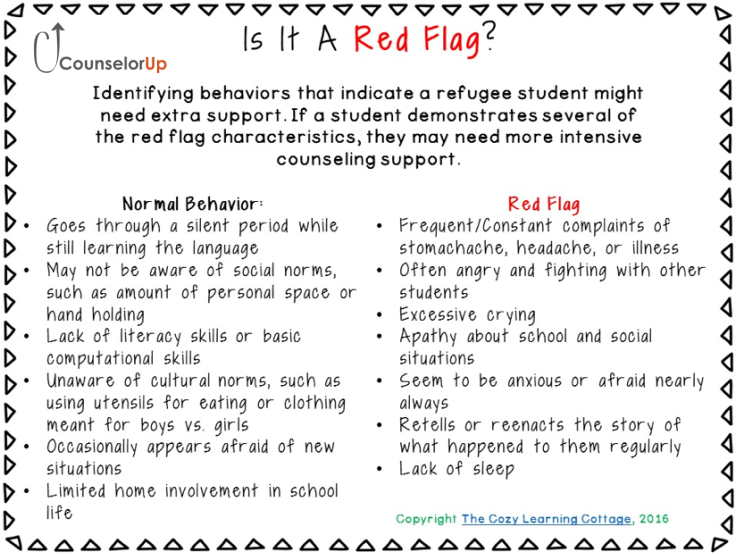
Refugee children have known fear and heartbreak in ways that their American teachers and friends may never know, and they have emotional scars as a result. Some refugees develop post-traumatic stress disorder, or PTSD, from the trauma they have witnessed and experienced. I have created a “red flag” cheat sheet to check for signs and symptoms of excessive anxiety in school aged children. All refugee children will likely need some time to adjust and feel comfortable in school, and that is normal. School counselors can support school staff to identify red flags that indicate the child may need some more significant emotional and psychological help to process what they have lived through. Keep an eye out for these red flags in refugee children and share this document with their classroom teachers and others who work closely with them to be looking for as well. You can download the cheat sheet here.
Picture

Teach Cultural Norms

​In addition to being unfamiliar with school culture, refugee students may not be familiar with other unspoken cultural norms. For example, in some cultures it is customary to stand much closer to another person while talking than it is in the US, and this may make some other students (and teachers) uncomfortable. In many other cultures, it is customary to point at things with your middle finger rather than your pointer finger. Rather than making fun of or humiliating the student, let them know that their way of doing things is good, but that we also do it differently here. Get to know students and learn as much about their culture as you can before assuming rudeness or defiance in the way they are behaving. In the same way, we can increase our cultural sensitivity by learning more about the child's culture and background.

Celebrate Diversity

 ​One of the best ways to welcome any new student into a class community is to let them share about things that are important to them and where they came from- the same is true for refugee students. Invite them to bring in any photos they might have or traditional clothing or toys. Let them teach the class how to say “Hello” in their language. Try some of the foods they may bring in for snack and lunch, and let the class ask them (appropriate, respectful) questions about where they came from and how things are different. Refugee children may being to consider their home culture and language as bad or “less than” American culture, which can pose problems in their homes and families as they grow. Celebrate the differences and diversity in your classroom and school.

​At the end of the day, refugee students are still students. They need to learn how to relate well to their peers, grow in knowledge and understanding, become confident in themselves as learners and as humans, and develop into their best and healthiest selves. There may be a few areas where they need extra support because of their history, but they are not too difficult or beyond helping. With the right help and direction, you will be amazed by how quickly they become thriving members of your classroom community.


Thanks so much Rachel! What a great reminder of the needs of refugee students as they enter our schools. If you haven't checked out Rachel's website The Cozy Learning Cottages, please do! You may have seen my pinterest feed lighting up with her many wonderful resources and I absolutely love the reason for her blog's name!

Moving on Up!

4/3/2016

 
Picture
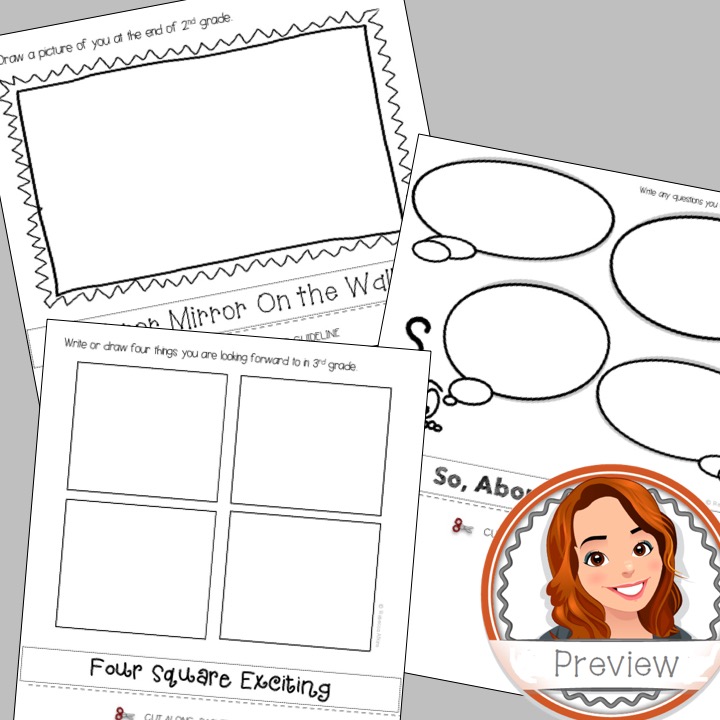
It's after spring break for most of us and the year will be over before we can blink twice. I love to end the year with a transition activity in each grade level. My flipbook would also work for classroom teachers or as a great end-of-the-year-I -have-a-wedding-to-go-to Sub Plan. 

In the schools where I have worked, we've always had step up day. On this day, each grade level would visit the next grade level and learn about that grade. The teachers usually made it fun to get the kids excited about the transition. For fifth graders, they were able to go to the gym and play games while step up day was occurring. I think it would be fun for classes to do a transition flipbook when they come back to their classrooms after Step Up Day. 
Picture
The top page of the flip book announces the next grade. Each subsequent page includes information about where the student is now (as a keepsake) and their goals, questions, and ideas about the next year. To wrap it up, we write a letter to next year's teacher. I really like doing the letter to the teacher because both teachers and students love it so much. The students because they feel like they can connect with their future teacher and the teachers because they get a glimpse into the student who will be in their class. I usually hold the letters until class lists come out in the fall and then give them to each teacher. Alternately, you could give the whole stack to the grade level chair to distribute when you return in the fall.

So, what do you do to help kids transition within the school? If you're interested in transition to middle school, you can see everything I do here.  There's even a middle school freebie for you to download! 

To purchase the Moving on Up Flipbook, please visit my TPT store. 

Military Too: Supporting National Guard & Reserve Families

11/11/2015

 
Military Too: Supporting Our National Guard and Reserve Families
Happy Veteran's Day! Thank you to all our current and former service members who sacrifice so much for our country. I was lucky enough to visit a local elementary school and take part in their Heroes Day yesterday and met many service members who had come to visit. I teared up when I heard the kids sing their thank you song. It was a great visit.
It is fitting that I am headed to our state conference today, on Veteran's Day, because I will be presenting about supporting National Guard and Reserve Families. I am far from an expert but I organized a professional development for my district and wanted to share what I have learned. You check out all the resources we gathered here on our Padlet.  I am also included my conference presentation below (may not be visible on mobile). Some of the slides are unique to the student information system used in North Carolina and may not be applicable elsewhere.

Mental Health of Affluent Teens

7/29/2015

 
Mental Health of Affluent Teens. www.counselorup.com
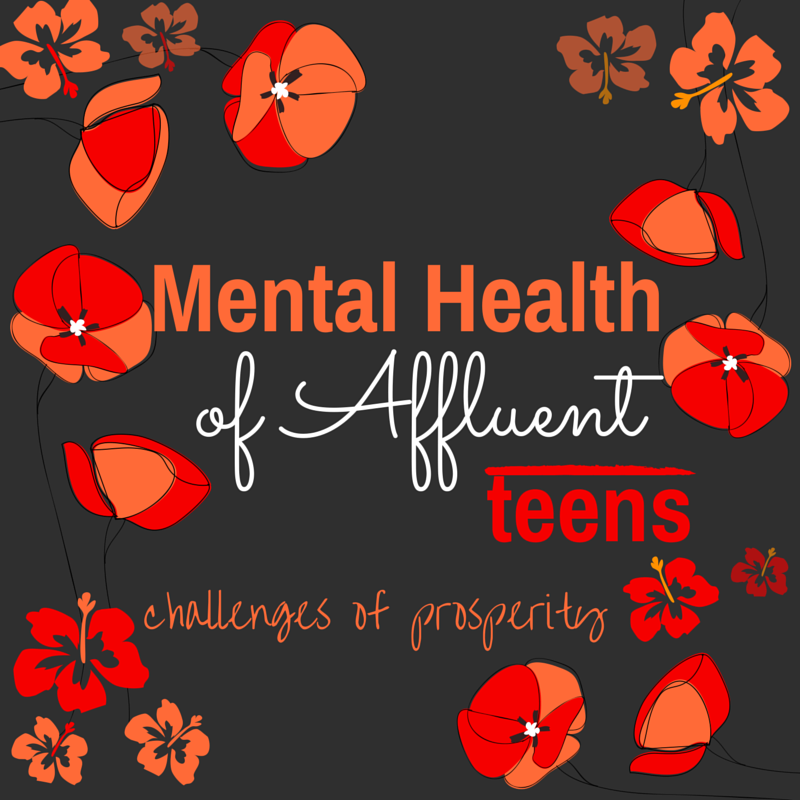
I spend a lot of time thinking and talking about poverty and childhood. I was interested to be contacted by the counseling department at Northwestern about an interesting study about affluent teens. They've even included a cool infographic for use in your PLC discussions and your work with students!

While it may seem like the lives of affluent families (those with incomes ranging from general upper middle-class to just below the hyper-wealthy 1%) are cozy, calm and easy, teens with families who have few financial problems have their own unique set of challenges. Cheryl Rampage outlines the challenges upper-class teens face in The Challenge of Prosperity: Affluence and Psychological Distress Among Adolescents. Readers will be surprised at how the seemingly cushy lifestyle of rich adolescents can be rife with emotional disconnect, the pressure to succeed, and the subsequent risk factors of leading such lives. 

According to Dr. Rampage, there are two clear risk factors that are directly related to affluence: achievement pressures and isolation from parents. These risk factors directly contribute to the startling statistics regarding the dangers of emotional isolation: 25­-30 percent more affluent boys and girls suffer from anxiety compared to other teens. They are more likely to use alcohol and more likely to abuse alcohol and other substances.  

Dr. Rampage addresses why both isolation and achievement pressures put adolescents into dangerous situations. It is common for affluent parents to impose high standards upon their children, expecting them to excel academically, socially, and athletically. Rampage writes that if this push “comes from inside the child, from passion and engagement, it can lead to achievement and satisfaction.” But if the push comes from outside of the self (i.e., from parents or other family members), it can have the exact opposite effect on children, diminish their motivation, and increase anxiety.  

Interestingly enough, it seems that the main issue is not the existence of high standards, but the fact that parents with lofty expectations of their children enforce the idea that “love is conditional on achievement,” says Dr. Rampage. This is a destructive value to instill in the mind of an adolescent—that they are only worthy of love if they are successful. Parents who obsess over superiority don’t just stress their children out—many of them suffer from self-confidence issues, with 25 percent of boys and 15 percent of girls reporting that they are “under-achievers” (Kindlon, 2001).  

The other risk factor, isolation from parents, can be both emotional and physical. Physical isolation can occur in upper class families simply because more money usually means bigger houses, thereby separating the families by square footage. If parents are harsh and judgmental when faced with their children’s inner experiences, their children will start to edit their daily discourse, saying things they know their parents want to hear to avoid conflict.  

Dr. Rampage notes that proximity to parents plays a major role in a healthy adolescence. Girls with a good relationship with their mothers made them less likely to be depressed, and a close relationship with fathers lessened their propensity to try drugs. Boys with close relationships to both parents have reduced depression symptoms. The studies cited by Dr. Rampage also mention that parental figures who might attempt to pick up the slack of a teen’s parents cannot incite the same effect as birth parents, and that a child with a good relationship with only one parent still suffers “the consequences of being distant from another.”  

Dr. Rampage says that “closeness to [a] parent is inversely correlated to affluence,” so families with less cushy living arrangements and careers often have better relationships with their children—either because they don’t work such long hours or because affluent children tend to be involved in numerous extracurricular activities.  

There are many risk factors directly related to affluence and upper-class adolescent development. Parents can avoid harming a child’s emotional growth by providing a concise structure for children, allotting them responsibility that directly correlates with their age and abilities communicating that their love comes without qualification and is a constant. While many people may scoff at the idea of wealthy children struggling, there are many kids who suffer mentally and emotionally because of their socioeconomic status. The goal is to minimize these cases by providing parents with the tools necessary to foster growth and forge healthy relationships.

Thanks so much to Declan Habeck at Northwestern for your guest post. If you're interested in guest posting, please let me know! I'd love to have you :)


The Challenge of Prosperity
Brought to you by Counseling@Northwestern’s Online Masters in Counseling
<<Previous
Forward>>
    Picture
    Picture
    Picture
    Picture
    Picture
    Picture

    Rebecca Atkins

    Welcome to my blog where I talk about all things school counselor and encourage others to Counselor Up!

     Subscribe in a reader

    This website uses marketing and tracking technologies. Opting out of this will opt you out of all cookies, except for those needed to run the website. Note that some products may not work as well without tracking cookies.

    Opt Out of Cookies
    Picture

    Interrupting Racism: Equity and Social Justice in School Counseling

    Links may be affiliate links. If you link and purchase, I may receive compensation at no additional cost to you. Thanks for your support of Counselor Up.

    Categories

    All
    ASCA National Model
    Behavior
    Counseling Career
    Equity
    Freebies
    Groups
    IMO
    Individual Counseling
    Just A Little Thing
    Lessons
    Office
    Organization
    Parent Book Club
    Parent Communication
    Professional Development
    #tbt
    Technology

    Archives

    July 2021
    June 2021
    August 2020
    June 2020
    May 2020
    November 2019
    October 2019
    September 2019
    August 2019
    June 2019
    May 2019
    April 2019
    March 2019
    February 2019
    January 2019
    December 2018
    November 2018
    October 2018
    September 2018
    August 2018
    June 2018
    April 2018
    March 2018
    January 2018
    December 2017
    November 2017
    October 2017
    September 2017
    August 2017
    July 2017
    June 2017
    May 2017
    April 2017
    March 2017
    February 2017
    January 2017
    December 2016
    November 2016
    October 2016
    September 2016
    August 2016
    July 2016
    June 2016
    May 2016
    April 2016
    March 2016
    February 2016
    January 2016
    December 2015
    November 2015
    October 2015
    September 2015
    August 2015
    July 2015
    June 2015
    May 2015
    April 2015
    March 2015
    February 2015
    January 2015
    December 2014
    November 2014
    October 2014
    September 2014
    August 2014
    July 2014
    June 2014