Counselor Up!
  • Blog
  • About
  • Speaker
  • Author
    • Book Summary
    • Book Discussion Guide
  • Things I Love
  • TPT Store

Using Twitter to Create a Professional Learning Network

7/10/2017

 
There are many ways to become an amazing school counselor. Some people spend a few years in the classroom before making the transition, while others jump right in after college or grad school. No matter how you arrive in the field, you should follow the sage advice of the nation’s best school counselors. But how do you find them?
I am excited to welcome Thomas Broderick, a Northern Californian freelance writer and consultant in the education field who occasionally blogs for Teach.com to talk about creating a professional learning network using twitter. This is even more meaningful to me as I have been blowing up my twitter account with the amazing things I have learned at #ASCA17. 

​Using Twitter to Follow the Best School Counselors

There are many ways to become an amazing school counselor. Some people spend a few years in the classroom before making the transition, while others jump right in after college or grad school. No matter how you arrive in the field, you should follow the sage advice of the nation’s best school counselors. But how do you find them?

At first glance, the social network Twitter may seem a world away from counseling. In fact, the opposite is the case. America’s best counselors regularly use Twitter to reach out to others in their profession. For aspiring school counselors, there is no better way to get insider information about counseling best practices than straight from the horse’s mouth.  
 
In this article we’ll explore some of Twitter’s most influential counselors, and how you can use Twitter to expand your personal learning network (PLN). That said, let’s get started!

Using Twitter

If you’ve never used Twitter, set up a professional profile that includes where you work and a link to your school’s website. If you already have a personal Twitter account, go ahead and set up a second professional account. It’s free!

NOTE: Make sure your professional account is open to anyone, and your personal account is only open to accepted followers. This is good advice for anyone working in a school. 

When setting up a professional account, go ahead and follow every teacher/administrator at your school who uses Twitter. If they follow you back (and they should), they will be able to see the counseling best practices you retweet from the nation’s best school counselors. You can also use your professional account to share the amazing work you do in your building. 
 
It’s now time to FOLLOW INFLUENCIAL COUNSELORS!

Three Great Counselors to Follow Right Away

​Terri Tchorzynski
Twitter Handle: @ttchorzynski
 
In January 2017, First Lady Michelle Obama awarded Terri the school counselor of the year award. Her Twitter feed is full of solid advice for counselors both new and seasoned. Her retweets come from a variety of professional counseling organizations you may want to follow, as well.
 
Chris Belser
Twitter Handle: @CBelser_PSC
 
A nationally board-certified school counselor, Chris has spent the last six years researching counseling best practices. His Twitter feed is full of links to research studies and articles that can help counselors connect to students of all ages.
 
Matthew J. Beck
Twitter Handle: @mattjbeck
 
Matthew is an excellent resource for school counselors who work with LGBT students. His Twitter feed and website are full of personal examples from which all education professionals can gain valuable wisdom.

Using These (and Other) Resource

After you follow a few counselors, you are likely to discover a treasure trove of informational Twitter profiles to follow, as well. But your PLN is only just beginning. As you retweet only the best material, consider reaching out to the counselors you follow. Ask them questions. Bounce ideas off their heads. You’d be surprised about how many people on Twitter actually answer the questions their followers ask them.
 
Establishing these relationships can greatly benefit the work you do with students and teachers. ​Twitter is a valuable tool for school counselors. It connects the nation’s counselors together, allowing the best to teach the rest. Using Twitter in this way, passionate counselors new on the job can achieve long-term professional success.  ​

Final Thoughts

Thanks Thomas and Teach.com for sharing some great ideas about using Twitter! Make sure you use #scchat in your posts so that you can connect with other amazing school counselors. Not sure what a hashtag is? I gotcha. Here are a few of my favorite peeps that I work alongside with on Confident Counselors all in one beautiful twitter list for you. 

Ahem, also, make sure you follow me :)

Picture
There are many ways to become an amazing school counselor. Some people spend a few years in the classroom before making the transition, while others jump right in after college or grad school. No matter how you arrive in the field, you should follow the sage advice of the nation’s best school counselors. But how do you find them?

Three Tier Intervention Model for School Counselors

5/22/2017

 
School counselors work with all students and provide a variety of services. As more schools are aligning their efforts to the MTSS (multi-tiered system of support) model, it's important for counselors to be able to share how their work aligns with the school's system of support.
School counselors work with all students and provide a variety of services. As more schools are aligning their efforts to the MTSS (multi-tiered system of support) model, it's important for counselors to be able to share how their work aligns with the school's system of support. 

Tier 1

In Tier 1, or core instruction, counselors support social emotional learning and academic skills via the ASCA Mindsets and Behaviors. Tier 1 instructional practices include explicit instruction to 100% of student, across all settings. Instructional practices may be adjusted to reteach and differentiate based on student need. Of course, school counselors are not the only personnel to support core instruction. Discuss the ASCA Mindsets and Behaviors with school staff and determine the areas of need for all students. Once areas of need are determined, the counselor can consult with administration and grade level teams to develop a plan for implementation.

Providing direct instruction of social emotional and academic skills is crucial for students to be successful both in school and post-graduation. We can't expect behavior and academic skills that have not been taught. Likewise, it isn't feasible for the school counselor to teach all of the social emotional and academic skills needed. An effective school counseling curriculum supports classroom learning of skills that are included in the instruction provided by the classroom teacher. Schoolwide initiatives like PBIS also fall into this tier because they provide the structure and expectations for all students. An effective core  allows 80% of students to be on target. 

Tier 2

In Tier 2, a second layer of strategic intervention is added. Students still receive core instruction but need additional support to be successful. Just like a math teacher will implement strategies to support students struggling to understand math concepts, students who struggle with social emotional learning or academic skills benefit from extra support.

The key word here is strategic. As a school, how do you know a student needs more support with behavior? Do you wait until they come to the office with a discipline referral? How can you use data to intervene earlier? Discussion in Professional Learning Communities within your building may be a great place to start. These discussions may show patterns of student behavior. PLCs typically dig deeper into available data as well and can serve as a jumping off point for counselors. 

As counselors, you are already doing Tier 2 work but may find that increasing your strategic focus may help. In my last school, I worked with students who had a high number of absences, students who needed to improve their academic skills, and students who showed anxiety about middle school. I chose these strategic interventions because I looked at the data and knew what was needed.

For counselors, Tier 2 can encompass work for a group of students that takes place individually. For instance, a behavior contract or Check-in/Check-out is a tier 2 intervention chosen for a group of students. Sometimes individual counseling can be a Tier 2 intervention, depending on the duration and intensity of the counseling. Meeting with a student 1-2 times about a friendship problem doesn't rise to the level of intensity that would be needed in a Tier 3 intervention.

Tier 3

Tier 3 interventions are intended for 1-5% of your student population. These kids are your super high flyers. Without additional supports, they can derail an entire classroom or grade level. Kids with Tier 3 support for behavior need a lot of help and most likely should be referred to an outside therapist. That doesn't mean there aren't Tier 3 interventions that counselors can put in place at the school! Tier 3 interventions are intensive, evidence-based instruction maximizing intensity, frequency, and duration. Interventions are progress monitored daily. Examples of Tier 3 interventions for counselors include FBA/BIP, suicide prevention, threat assessment, or collaboration and consultation with wrap around services for a child. 
So what instructional practices and interventions do you provide? How do they fit into the tiered model? I'd love for you to share!
School counselors work with all students and provide a variety of services. As more schools are aligning their efforts to the MTSS (multi-tiered system of support) model, it's important for counselors to be able to share how their work aligns with the school's system of support.
Picture

Lesson Planning for the Industrious Child

5/15/2017

 
School counselors and educators talk a lot about
School counselors and educators talk a lot about "developmentally appropriate" instruction. The ASCA Mindsets and Behaviors mention development 11 times in a 2 page document. Our NC Evaluation Standards state "applies theories and research about human development and student learning in counseling programs and services deisgned o enhance student success." But what does that actually mean?

I am happy to introduce Syrenna Kononovitch from Online Counseling Programs to share lesson planning tips using psychosocial developmental theories. Syrenna is the editor and co-creator of the School Counselor ToolKit - a free supportive resource on all things school counseling. I think you'll love her post because not only does she dive deeper into developmentally appropriate lesson planning but she includes lots of links to great resources! Welcome Syrenna :)


The theory of psychosocial development from infancy into adulthood proposed by Erik Erikson illustrates the psychosocial crisis of industry vs. inferiority in children from age five to twelve. During this development, children begin to learn to independently work and look to their teachers as role models. Friends become a larger influence in a child’s life as they may feel they need to win approval from others by demonstrating skills valued by peers.
 
When children are reinforced in their competencies, they begin to feel industrious in their initiatives and thus confident in their abilities to achieve goals. If restrictions are placed, they will begin to feel inferior and doubtful of their own abilities.
 
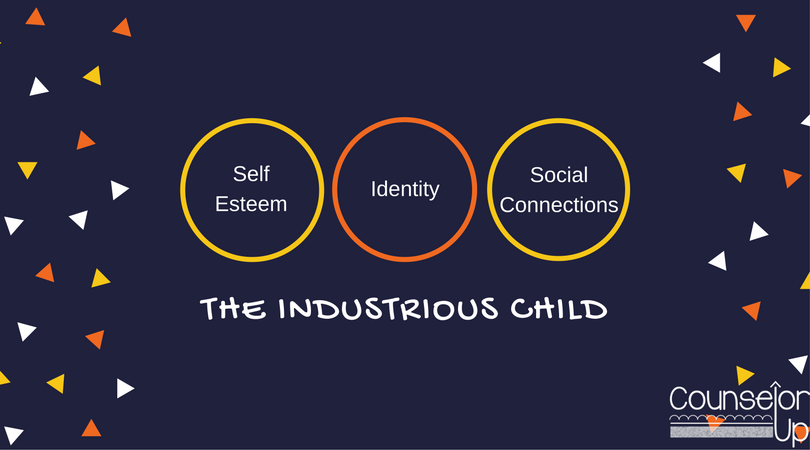
Maintaining a balance between the two is key and learning does require some failure. School counselors have surely seen both sides -  the formation of a grandiose personality and students who feel inferior.  School counselors can help to shape students' strengths, weaknesses, and behavior with counseling lesson plans on self-esteem, identity formation, and the development of social relationships.
School counselors and educators talk a lot about

Self Esteem

The Missouri Department of Education provides school counselors with lesson plans specific to identity develop and increasing self-esteem for children in K-5 on identification of
 
  • Variety of feelings
  • Personal roles in school
  • Personal character traits
  • Traits needed to contribute to a classroom, school community, and what characteristics traits are needed to be a contributing member to the school community.
  • Positive traits and areas for personal growth
  • Responsibilities as a community member
  • Personal characteristics to maintain a positive self-concept

Identity Development

Empowering students to continue to grow their own identity can be considered a staple to the school counseling profession. By integrating growth development and identity formation lessons into groups, individual sessions, and classroom guidance plans, students will be able to develop a positive sense of self.
 
Using growth mindset lesson plans like My Monster Has a Growth Mindset can guide students in discovering their strengths and resilience by promoting positive alternative behaviors. Character education also provides students with an insight to positive attributes that they can take with them long after school is over. Kids of Character Posters can be used to have students think about what each trait means to them and why it’s a positive attribute to have.
 
Character.org provides educators and school counselors with books to reference and suggested lesson plans on comparing character traits, determining what is negative and positive character, and illustrating their current positive attributes.

Social Relationships

When developing positive interpersonal relationships with others, students in the psychosocial industry vs inferiority development stage often turn to their peers as a first source of acknowledgment and acceptance. Students may experience jealousy, conflict, and engage in negative behaviors to gain the trust of their peers. 
 
Lesson plans that involve the social acceptance of oneself and others promote caring and kindness that are essentially the foundation for a child’s moral development. The 101 Ways to Teach Social Skills workbook provides lesson plans for aspects of social development on communication, being a part of a group, expression, caring about self and others, problem solving, standing up for yourself, and managing conflict. Beginning on page 75, the authors aim to provide planning on teaching skills such as empathy, positive social communication, helpfulness, respect, and making friends. 

Through these three components, school counselors can provide their students with the support and tools they need to become confident learners, friends, and members of society and school.

Thanks for joining us today Syrenna! The best part? You, awesome readers, are already doing this work! Now you have the grad-school refresh to remind you the why behind the excellent work you do. What is your favorite resource or idea to support industry vs inferiority?
School counselors and educators talk a lot about
Picture

13 Reasons Why School Counselors Should Be Talking About This Show

4/24/2017

 
Unless you have been completely off social media (the modern day living under a rock), you have probably heard about the show “Thirteen Reasons Why.” The show depicts a boy (Clay) listening to a series of tapes made by his love interest (Hannah) before she dies by suicide. Because I spend more time in the car than on the couch (sadly), I listened to the audiobook and have watched a few of the episodes on Netflix. For the purposes of this post, I am not going to delve into if this show should have been made or the book written. It’s here, so what do we do about it?

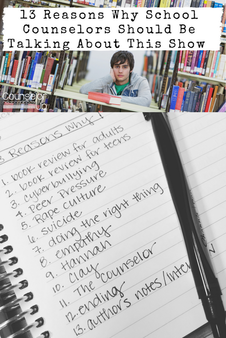
  1. Book review for adults: This is one of those YA books that could have been written for adults. There is a nuance to the story that I think adults will appreciate. It was interesting to see the story told from Hannah and Clay’s perspectives. As an adult, you can see the many errors in thinking that are so much a part of adolescence.
  2. Book review for teenagers: Typically, I gear most of my work towards the elementary school age. I don’t think this show or book would ever be appropriate for any young child. In addition to suicide, there are drugs, drinking, sexual acts, and rape depicted. I’m on the fence about whether this book and show is appropriate for teens. If a teen you know is watching or reading, I recommend that you watch or read along with them so that you can help them to process what they are watching.
  3. Cyberbullying: One of the main reasons that Hannah is struggling at her new school is cyberbullying. Innocuous interactions turn into rumors and scandal without any substance behind them. In one of the opening scenes of the show, you see Hannah’s love interest show his friends a slightly compromising picture of her (though taken in an innocent way). They immediately grab his phone and text the photo and a lie about it to the whole school despite his protests. This would be a cool clip to show in a lesson about cyberbullying and appropriate internet use.
  4. Peer Pressure: In this story, you can see both active peer pressure and peer pressure that takes place because of a lack of action. In one scene, a boy is inappropriately touching a girl despite her protests and the other student in the hot tub gets out and leaves the girl alone.
  5. Rape Culture: As an adult reading this book, I noticed the pervasiveness of rape culture. Hannah is often the recipient of touches, glances, and words that are unwanted. While she protests those actions, no one else does and I worry that the message gets lost in the messenger.

  6. Suicide: Guess what? Suicide is not the greatest revenge to take against people who have wronged you. Even if you make 13 tapes about how awful they were. All the people who wronged Hannah listened to the tapes and they seem to take them to heart. This aspect of the book and show got it wrong.

  7. Doing the Right Thing: Supportive adults watching with their teen have many opportunities to point out the right thing that could have been done. There are many points where a character makes a choice that leads the story down a negative path.
  8. Empathy: I had a lot of empathy for Clay while reading and watching. As an adult, I had a lot of empathy for many of the other (outwardly meaner) characters. I remember making similar dumb mistakes when I was a teenager. Teens will likely see the characters in a more good guy/bad guy perspective.
  9. Hannah: While reading the book, I was kind of annoyed by Hannah. This is probably not how she’s “supposed” to come off but it’s the truth. She seemed, well, needy. In the show, she comes off as much cooler before her downward spiral. I’m torn on whether this is a good thing. Teenage me would have wanted to be Hannah and you see how that turns out.
  10. Clay: It’s hard for me to talk about Clay without giving the plot away. Let me just say that he is not a nuanced character. He’s a one-sided coin for sure. As an adult reading, I worry about the psychological pressure these tapes have on him.
  11. The Counselor: Hannah tells you early on that if the previous “guidance” (blech) counselor had still been there that the story might have turned out differently. I think the counselor plays a larger role in the show that I haven’t finished yet but in the book, I feel for the guy. Hannah comes into his office (by the way, he also teaches English so he’s a part time school counselor) when he’s having a bad day. He doesn’t handle it well. But, I ask you, does your blood run cold knowing that you’ve had off days too? Mine sure did.
  12. The Ending: No spoilers! But it’s redeeming. But not for Hannah.
  13. Author’s Notes: If you read the book, read the author’s interview at the end about what he is going for here. If you watch the show, watch this clip on the role of suicide and mental health in the creation of the show.
Bottom Line:  Read/watch-worthy for adults and mature teens. Not appropriate for younger kids (middle schoolers I’m talking to you). If you are an adult in a child’s life, make sure to talk openly about the topics that are brought up in the show. Let teens ask questions and talk with them in an open discussion. These are hard topics and it’s better to talk about them than to hide from them. For more information see Considerations for Educators, Talking Points, and 10 Things Parents Should Know.
Unless you have been completely off social media (the modern day living under a rock), you have probably heard about the show “Thirteen Reasons Why.” The show depicts a boy (Clay) listening to a series of tapes made by his love interest (Hannah) before she dies by suicide. Because I spend more time in the car than on the couch (sadly), I listened to the audiobook and have watched a few of the episodes on Netflix. For the purposes of this post, I am not going to delve into if this show should have been made or the book written. It’s here, so what do we do about it?
Picture

5 Steps to a Year Long School Counseling Program

4/6/2017

 
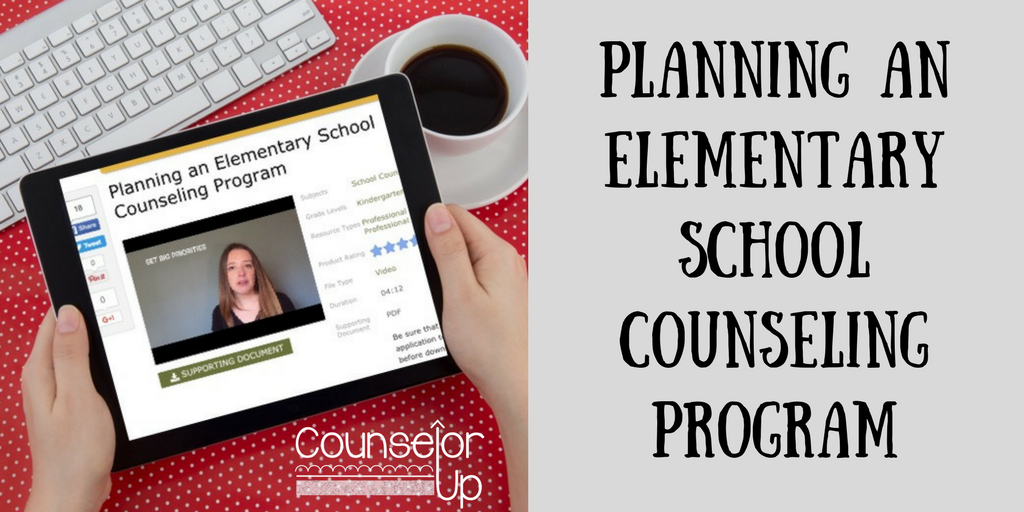
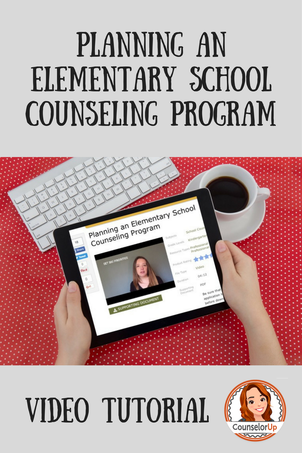
Ready to make a plan and {actually} stick to it this year?  Be in charge of your schedule instead of the other way around. This video describes how to take control of your day and make a plan you can stick with. Ever wonder how to design your lessons and groups at the beginning of the year? Here are my 5 easy steps!
Ready to make a plan and {actually} stick to it this year? Be in charge of your schedule instead of the other way around. I've created a video describing how to take control of your day and make a plan you can stick with. Ever wonder how to design your lessons and groups at the beginning of the year? Here are my 5 easy steps! I've included the transcript here but if you'd like to see the video and download the supplemental materials for FREE, check them out.
 
We will learn how to
  1. Take control of your schedule by planning.
  2. Set big priorities using tiered instruction and intervention
  3. Determine what’s manageable in a week to think about the year
  4. Create a group plan
  5. Make a calendar to share with your staff
 
Sometimes it can be overwhelming to start a new program. Where do you begin? How do you determine what your weekly schedule will look like much less the whole year! If you find you are spending most of your time running from one thing to another without a plan set for the day, it’s time to take control of your schedule.
 
Think about your big priorities first. As with all productivity tips, you gotta think about what’s most important to you. Once you decide your big ideas, you’ll know what has to make it on your schedule. For me, I like to use the 3 tier intervention model as my framework. My big focus is on core, classroom lessons with all students.

Classroom lessons can be the trickiest to schedule anyway, so it’s a great place to start. To begin, think about how many lessons that you could teach per week and still manage the other responsibilities of your job. Let’s say that ten 30-minute lessons is reasonable for you. If you have 20 classrooms in your building, you could teach each class every other week. If you have 40 classrooms in your building, you could teach about once per month. Share this schedule with teachers and let them know the plan. Will you be on a set rotation, will they be signing up, or will you push-in during part of their day? I liked to create a color-coded calendar letting teachers know when I would be teaching their grade level.
 
The second tier in my 3 tier intervention model includes small group counseling. I need to know how many groups I can feasibly run in a year so I can prioritize the needs of my students. Just like we did with classroom lessons, think about how many groups you could run in a week. Once you really get groups going and have lesson plans you can rely on, it’s easy to run a lot of groups. To get started, one group per day is typically pretty manageable. Think about what your data say, what are the needs of your students, and how often will you meet. What kind of time commitment can you make to groups.

I like to start my group in waves: fall groups, winter groups, and spring groups. Having three sections of groups helps me to wrap my head around how many groups I will be able to run this year and keeps me focused on getting them started. All the groups start at the same time and then end when the group material is done. This allows me to be really systematic about starting. When I am scheduling my groups, the first thing I have to figure out is the when. That’s the hardest part of a group!
 
Unfortunately, for me, in the last few years, I have had to run my groups during lunch because I could not take students out of academic time. While engaging lessons can be challenging when the students are eating, it does make the scheduling easier! If I know I am going to pull third grade groups from 11:30-12:00 on Mondays, then I know I should not schedule any classroom lessons at that time.
 
Let’s recap:
First – Decide how many classes you’re going to teach
Second – make a plan for how many groups you’re going to run and when you would like them to start.
 
Now it’s time to really start working on that calendar. Check out the supplemental documents included with this video to see how I use a combination of a set schedule (for groups, classes, and meetings) and a flexible schedule (for consultations, individual sessions, and responsive services). Just because a counselor’s job naturally entails unexpected occurrences, doesn’t mean we can’t make a plan for productivity.

And that's it! How do you plan for your year?
 

Picture
Ready to make a plan and {actually} stick to it this year?  Be in charge of your schedule instead of the other way around. This video describes how to take control of your day and make a plan you can stick with. Ever wonder how to design your lessons and groups at the beginning of the year? Here are my 5 easy steps!
<<Previous
Forward>>
    Picture
    Picture
    Picture
    Picture
    Picture
    Picture

    Rebecca Atkins

    Welcome to my blog where I talk about all things school counselor and encourage others to Counselor Up!

     Subscribe in a reader

    This website uses marketing and tracking technologies. Opting out of this will opt you out of all cookies, except for those needed to run the website. Note that some products may not work as well without tracking cookies.

    Opt Out of Cookies
    Picture

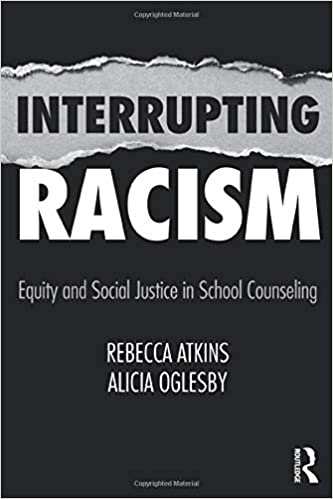
    Interrupting Racism: Equity and Social Justice in School Counseling

    Links may be affiliate links. If you link and purchase, I may receive compensation at no additional cost to you. Thanks for your support of Counselor Up.

    Categories

    All
    ASCA National Model
    Behavior
    Counseling Career
    Equity
    Freebies
    Groups
    IMO
    Individual Counseling
    Just A Little Thing
    Lessons
    Office
    Organization
    Parent Book Club
    Parent Communication
    Professional Development
    #tbt
    Technology

    Archives

    July 2021
    June 2021
    August 2020
    June 2020
    May 2020
    November 2019
    October 2019
    September 2019
    August 2019
    June 2019
    May 2019
    April 2019
    March 2019
    February 2019
    January 2019
    December 2018
    November 2018
    October 2018
    September 2018
    August 2018
    June 2018
    April 2018
    March 2018
    January 2018
    December 2017
    November 2017
    October 2017
    September 2017
    August 2017
    July 2017
    June 2017
    May 2017
    April 2017
    March 2017
    February 2017
    January 2017
    December 2016
    November 2016
    October 2016
    September 2016
    August 2016
    July 2016
    June 2016
    May 2016
    April 2016
    March 2016
    February 2016
    January 2016
    December 2015
    November 2015
    October 2015
    September 2015
    August 2015
    July 2015
    June 2015
    May 2015
    April 2015
    March 2015
    February 2015
    January 2015
    December 2014
    November 2014
    October 2014
    September 2014
    August 2014
    July 2014
    June 2014